Loading...
Serving Quincy, MA and surrounding areas. (617) 691-5917
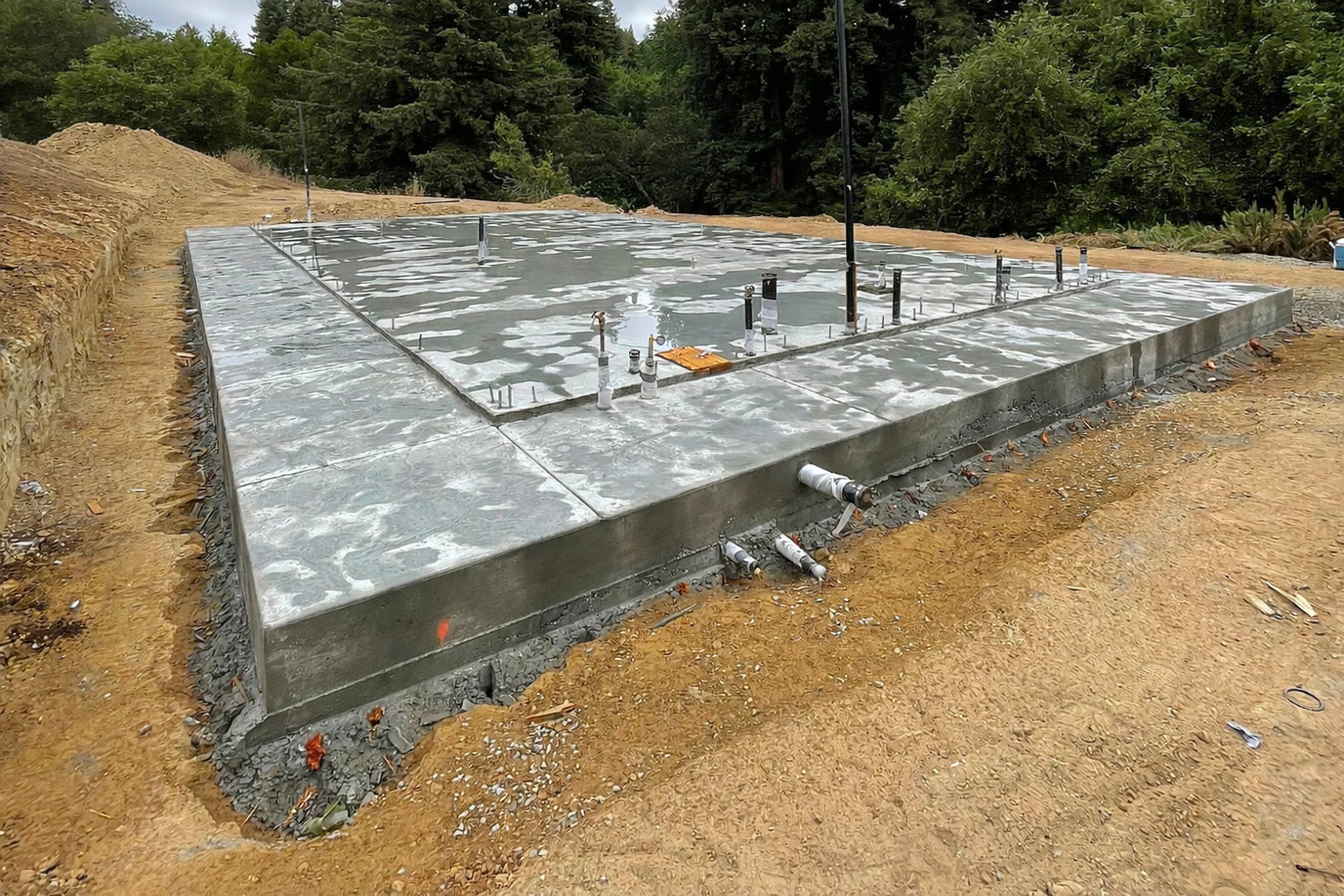
A slab poured without proper footings will crack and shift within a few winters. We build slab foundations in Quincy with the depth, reinforcement, and moisture control this climate demands.
Slab foundation building in Quincy means preparing the ground, digging footings below the Massachusetts frost line, laying a gravel drainage bed and moisture barrier, placing steel reinforcement, and pouring a thick monolithic concrete slab in one pass. Most residential slab projects take two to four days of active work, with a curing period of at least one week before framing begins.
If you are adding a garage, a ground-level addition, or a detached accessory structure to your Quincy home, a properly built slab is the foundation everything else depends on. The quality of the slab determines whether walls stay plumb, doors open cleanly, and floors stay level over the decades.
For projects that also need buried structural supports, we work closely with our concrete footings work so the slab and its supporting elements are designed and poured as one integrated system.
If you are adding a garage, a sunroom, or a ground-level addition to your Quincy home, you need a new slab to serve as the floor and structural base. This is the most straightforward reason to call a concrete contractor: there is no existing foundation, and one needs to be built before framing can begin. Without a proper slab, any structure built on top will shift, settle unevenly, and cause serious problems within a few winters.
Hairline cracks in concrete are normal and usually harmless. But if you notice cracks wider than about a quarter inch, cracks that run diagonally across a corner, or spots where one side of a crack sits noticeably higher than the other, the slab has moved. In Quincy's older neighborhoods, this often happens when aging fill material compresses or when frost repeatedly pushes the ground up and down over decades.
In Quincy neighborhoods close to the water, including parts of Germantown, Marina Bay, and the lower-lying areas near Quincy Bay, groundwater can be close to the surface. If your concrete floor feels damp, shows white powdery deposits, or produces a persistent musty smell, the moisture barrier under the slab may have failed or was never properly installed. This is worth addressing before the problem spreads to framing or flooring above.
Many Quincy homes have garage slabs poured decades ago without the reinforcement or moisture protection that is standard today. If your garage floor has large broken sections, significant heaving from frost, or areas where the concrete has crumbled to gravel, patching is usually not a lasting solution. A full slab replacement gives you a level, structurally sound floor that will last for decades with normal care.
We pour residential slab foundations for garages, additions, workshops, and ground-level living spaces. Every slab we build starts with proper site preparation: grading and compacting the subgrade, laying a gravel drainage bed, and installing a heavy-duty polyethylene moisture barrier. Steel reinforcing bars or wire mesh go in next, positioned to give the finished slab the tensile strength it needs to resist cracking under load and thermal movement.
For projects that require underground plumbing or electrical conduit, we coordinate that rough-in work before the pour. Once the forms, reinforcement, and utilities are in place, a city inspector visits to verify the setup meets Quincy's building code requirements. Only then does the concrete truck arrive. This inspection step, required by the City of Quincy, is one of the most important protections a homeowner has before the slab is permanently in place.
For projects that also need deep structural support below the slab, we integrate our slab work with concrete footings designed to carry wall and roof loads down to stable soil. We also offer standalone foundation installation for full basement and crawl space projects where a slab alone is not the right solution.
Best for detached and attached garages: flat, reinforced floor with a slight pitch toward the door so water drains out.
Suited to ground-level additions on existing homes where the new slab must tie into the original foundation without cracking.
Ideal for workshops, sheds, and outbuildings that need a permanent, frost-resistant base rather than a gravel or wood platform.
Quincy sits in a climate zone where the ground freezes every winter, and the frost line in Massachusetts reaches approximately 48 inches below the surface. Footings that do not go that deep will be pushed upward by freezing and thawing soil, cracking the slab from below. This is one reason a slab poured correctly in Quincy costs more than national average estimates suggest: the deeper excavation, the additional concrete in the footings, and the longer setup time all add up.
In lower-lying Quincy neighborhoods near Quincy Bay and the Fore River, including parts of Germantown and Marina Bay, groundwater management is a second major concern. The moisture barrier under the slab is not optional in these areas; it is the difference between a dry floor and a chronic dampness problem. Homeowners in Quincy close to the water should ask contractors specifically how they address high groundwater before accepting any quote.
Much of Quincy's housing stock was built before 1960, and many homeowners in neighborhoods like Wollaston and South Quincy are adding garages or additions to older homes rather than starting on a clean lot. This means tying new slab work into existing structures, which requires careful planning. Homeowners in Brockton and Newton face similar conditions, and we bring the same level of planning to every project we take on in these communities. The American Concrete Institute sets the standards that govern how slab-on-grade construction should be designed and executed for cold climates.
We visit your property to assess soil conditions, measure the area, confirm lot access for concrete trucks, and review any underground utility concerns before giving you a written estimate. We reply within one business day of your first contact.
We apply for the building permit with the City of Quincy's Inspectional Services Department on your behalf. Permit approval typically takes one to two weeks. Your project is scheduled after the permit is issued, so there are no delays once the crew arrives.
The crew excavates to the required footing depth, compacts the subgrade, lays the gravel drainage bed, installs the moisture barrier, and places the steel reinforcement. A city inspector verifies the setup before concrete is ordered. No concrete goes in until that check is done.
Concrete trucks arrive and the pour happens in one day. The slab is kept protected during the curing period. A final city inspection closes the permit. You receive a finished, documented slab ready for framing, typically within one to two weeks of the pour.
We visit your site before quoting, handle the permit with the City of Quincy, and give you a written price with no surprises. Spring slots fill quickly, so the earlier you reach out, the better your chances of a start date that works for you.
(617) 691-5917We dig every footing to a minimum of 48 inches below the surface, the depth required to stay below the Massachusetts frost line. This is not a shortcut we skip to lower a quote. A footing that is too shallow will move every winter, and that movement cracks slabs from below.
We file the building permit with the City of Quincy as a standard part of every slab project. The city's pre-pour inspection is scheduled before the concrete truck ever arrives. You get a clean permit record attached to your home, which matters when you sell or refinance.
Every slab we pour includes a gravel drainage bed and a heavy-duty polyethylene moisture barrier. In Quincy's coastal neighborhoods, where groundwater can be closer to the surface than homeowners realize, skipping this step is how you end up with a wet floor two years after the project closes.
We work across Quincy, Newton, Cambridge, Brockton, and nine additional communities in the greater Boston area, which means our crews understand the soil conditions, permit requirements, and seasonal constraints that vary across Norfolk and Middlesex counties. That local knowledge is reflected in how we estimate and how we build.
The Massachusetts Office of Consumer Affairs and Business Regulation lets you verify a contractor's Construction Supervisor License before you sign anything. We encourage every homeowner to check. A licensed, insured contractor who pulls permits and welcomes city inspections is the baseline you should hold every quote to.
Full basement and crawl space foundation installation for homes that need more than a slab, including complete excavation, waterproofing, and drainage systems.
Learn moreStandalone footing pours for decks, posts, walls, and additions where a full slab is not needed but a frost-depth structural base is.
Learn moreFoundation projects in the Boston area book out months in advance. Reach out now to get on the schedule for a written, on-site estimate with no pressure and no surprises.