Loading...
Serving Quincy, MA and surrounding areas. (617) 691-5917
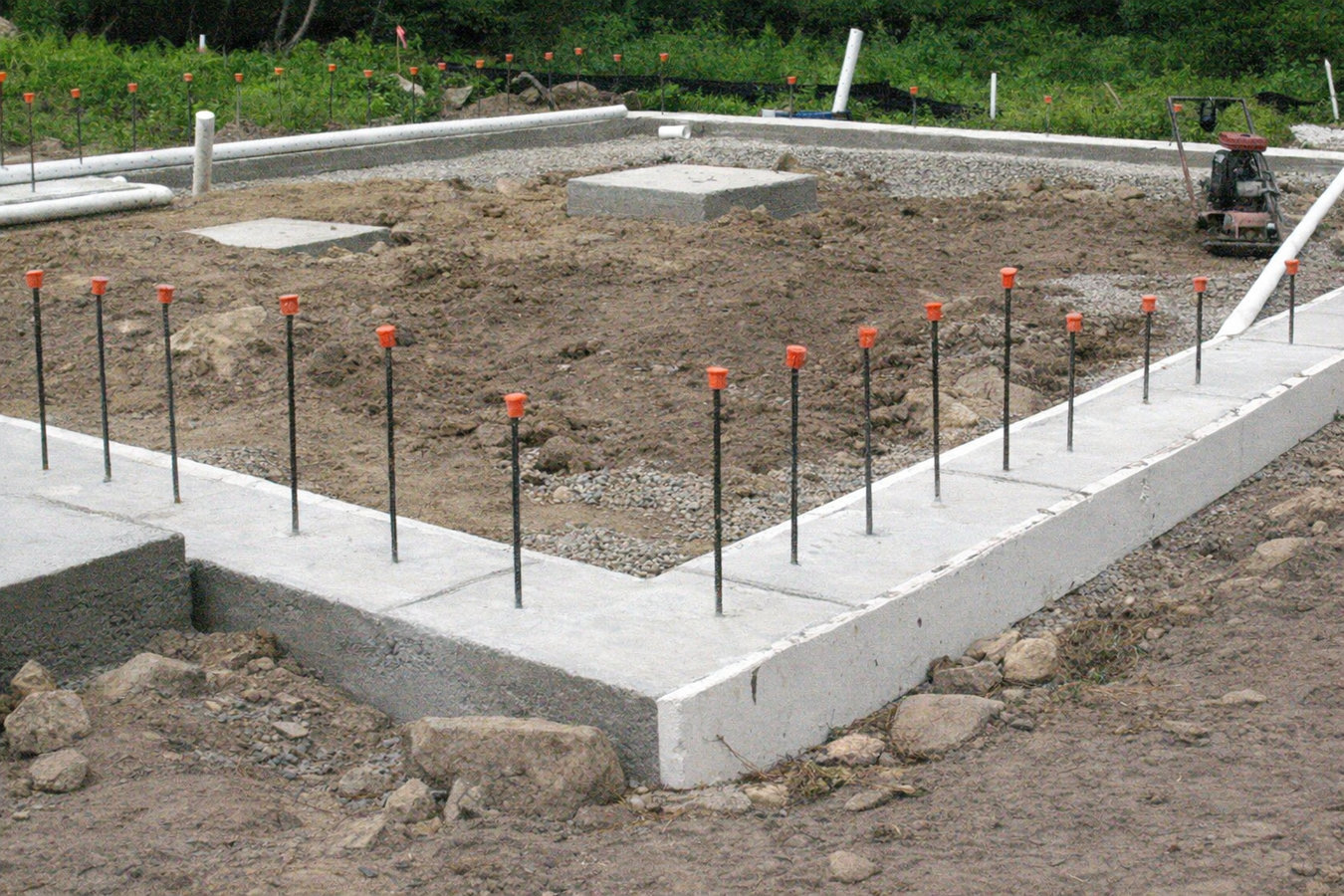
A deck or addition that shifts after the first winter was not built on footings dug deep enough. We pour concrete footings in Quincy below the frost line, with permits and the city inspection done before a single yard of concrete goes in.
Concrete footings in Quincy are the buried concrete bases that hold up decks, additions, porches, and outbuildings. They are dug below the frost line, typically 48 inches in Massachusetts, poured with ready-mix concrete, and left to cure before any framing begins. Most residential projects take one to two days of active work plus a week of curing; two to four weeks total when permit time is included.
Depth is the single most important variable in footing work in this area. When a footing sits above the frost line, the ground freezes beneath it in winter, expands upward, and pushes the structure out of level. That movement shows up as sticking doors, widening gaps between a deck and the house, and cracks in the walls above. These problems are gradual and easy to ignore until they become expensive. In Quincy, where winters bring sustained cold and dozens of freeze-thaw cycles, footings that were not dug deep enough are among the most common causes of structural problems in older additions and porches.
Footing work is closely related to foundation installation for larger projects: footings form the base of every foundation wall, and getting them right is the first step in any new construction or addition project in Quincy.
When footings shift or settle, the frame above them moves with them, and doors and windows are the first place you notice it. If a door that used to swing freely now drags on the floor or fails to latch, or a window has developed a gap at one corner, the structure below is worth evaluating. In Quincy's older homes, this kind of movement often traces back to footings that were originally poured too shallow for Massachusetts frost depth requirements.
Hairline cracks in concrete are not always serious, but cracks wider than a pencil tip, cracks that run diagonally, or cracks that have grown measurably over the past year suggest the footing below is moving. This is especially common in Quincy neighborhoods built on filled or clay-heavy soil near the coast, where the ground shifts more than it would on firm, undisturbed ground.
A visible gap opening between a deck and the house wall, or a porch that tilts noticeably away from level, often means the footings supporting it have shifted. This is a common issue in Quincy's coastal and near-coastal neighborhoods, where soil movement is more pronounced. A tilting deck becomes a safety hazard and the repair cost grows the longer it is left alone.
Any new structure attached to your home, or any freestanding structure large enough to require a permit, needs properly engineered footings before any framing goes up. In Quincy, this is a code requirement, not just a best practice. Getting the footings right from the start is far less expensive than correcting a settling structure two or three years after the project closes.
We pour concrete footings for decks, porches, additions, garages, and outbuildings throughout Quincy and the surrounding South Shore communities. Every project starts with a site visit, not a phone quote. We need to see the soil, the access to the work area, and what you are building before we can put a number on paper that means anything. In Quincy, where soil conditions vary from solid ledge in hillier neighborhoods to soft marine clay near the water, what we find during that visit can change the depth or size of the footing required.
After the site visit and permit approval, we excavate to the required depth, set forms to the correct dimensions and level, and schedule the city inspection before ordering concrete. Rebar reinforcement is included wherever local code or structural loads require it. The pour happens in a single day for most residential projects. We leave the site clean and give you clear written instructions on curing time and when framing can begin.
For larger projects, footing work connects directly to our foundation installation and foundation raising services. If your project involves a full foundation or a lift, the footing work is sequenced as part of that larger scope so everything is designed and permitted together.
Suited to homeowners building or replacing a deck, porch, or covered entry; includes permit, inspection, and pour to Massachusetts frost depth.
Best for homeowners extending living space; footings are designed to carry the load of the new framing and integrate with the existing foundation.
Ideal for detached garages, sheds, or accessory dwelling units that require a permitted structural base before construction can begin.
Massachusetts requires footings to be placed at least 48 inches below finished grade, and Quincy's winters make that requirement critical rather than bureaucratic. The ground here freezes and thaws repeatedly between November and March. Any footing above that depth is vulnerable to being pushed upward by frost heave, which translates directly into a structure that shifts every winter. A contractor who works in Quincy regularly knows this depth requirement as a baseline, not as something to negotiate around to lower a bid.
Quincy's soil adds a second layer of complexity. The city has neighborhoods built on solid ground, filled land, and coastal marine clay, sometimes within a few blocks of each other. Parts of South Quincy and the waterfront neighborhoods near Quincy Center sit on softer fill, where footings may need to be wider or deeper to achieve the same bearing capacity. A contractor who visits your site before quoting will account for what is actually under your yard, not what a standard estimate assumes. We also work regularly in Newton and Brockton where footing depth requirements and soil conditions present similar considerations.
A large share of Quincy's housing stock was built between the 1900s and the 1950s. Many additions and porches from that era were constructed on footings that predate current code requirements. When homeowners in neighborhoods like Wollaston, Merrymount, or Germantown plan new additions, they sometimes discover that the existing structure needs footing work before the new framing can be connected safely. We assess what is there and tell you honestly what is involved before the project begins. The American Concrete Institute publishes guidance on residential footing standards that informs how we approach every project.
We start with a phone conversation and then visit your property. We look at the soil, the access to the work area, and the scope of what you are building before we write an estimate. You will hear back within one business day of your initial call.
We submit the permit application to the City of Quincy and schedule the required pre-pour inspection. Budget one to two weeks for permit processing. We handle all the paperwork; you do not need to visit any city office.
The crew digs to at least 48 inches, sets forms to the correct dimensions, and installs rebar where required. The city inspector verifies the depth and layout before any concrete is ordered. No concrete goes in without that sign-off.
The concrete is poured in a single day and the forms are removed after it sets. The footings need about a week before framing can begin on top. We give you written curing instructions and confirm the timeline for your next contractor to start.
Free on-site estimate. We visit your property before we quote. Written estimate with no obligation.
(617) 691-5917Massachusetts requires footings below the frost line, and in Quincy that means at least 48 inches. We excavate to that depth on every project, and we tell you directly if site conditions require going deeper. A contractor who offers a shallower depth to win a lower bid is setting up your structure to fail within a few winters.
No concrete goes into the ground on any of our Quincy projects until the city inspector has visited the site and signed off on the depth and layout. That inspection is your independent confirmation the work is done correctly, and the permit creates a record that protects you every time your home is appraised, sold, or refinanced.
We do not quote footing work over the phone. Quincy has neighborhoods with filled land, marine clay, and ledge within a short distance of each other, and the soil conditions under your specific property determine what the job actually requires. Our estimate reflects what is in your yard, not a generic assumption.
We have completed footing projects in Quincy's older neighborhoods and throughout our full service area. That breadth of local experience means we know which site conditions to look for and how to work efficiently within Quincy's permit process. See the{' '} Portland Cement Association's guidance at{' '} <a href='https://www.cement.org' target='_blank' rel='noopener noreferrer' className='text-primary underline underline-offset-2 hover:opacity-80'>cement.org</a> for authoritative standards on residential footing construction.
Footing work is invisible once the project is finished, which is exactly why it matters so much. When PaveRight does the footings, you know they were dug to the right depth, inspected by the city before the pour, and built to carry the load above them through decades of Quincy winters without shifting.
Lifting an existing foundation to correct settlement or create additional clearance, often paired with new footing work underneath.
Learn moreFull foundation installation for new construction or replacement projects where the entire below-grade structure is built from the ground up.
Learn moreSpring fills up fast and permits take time. Call or send a message today so we can visit your site and get your project scheduled before the season peaks.