Loading...
Serving Quincy, MA and surrounding areas. (617) 691-5917
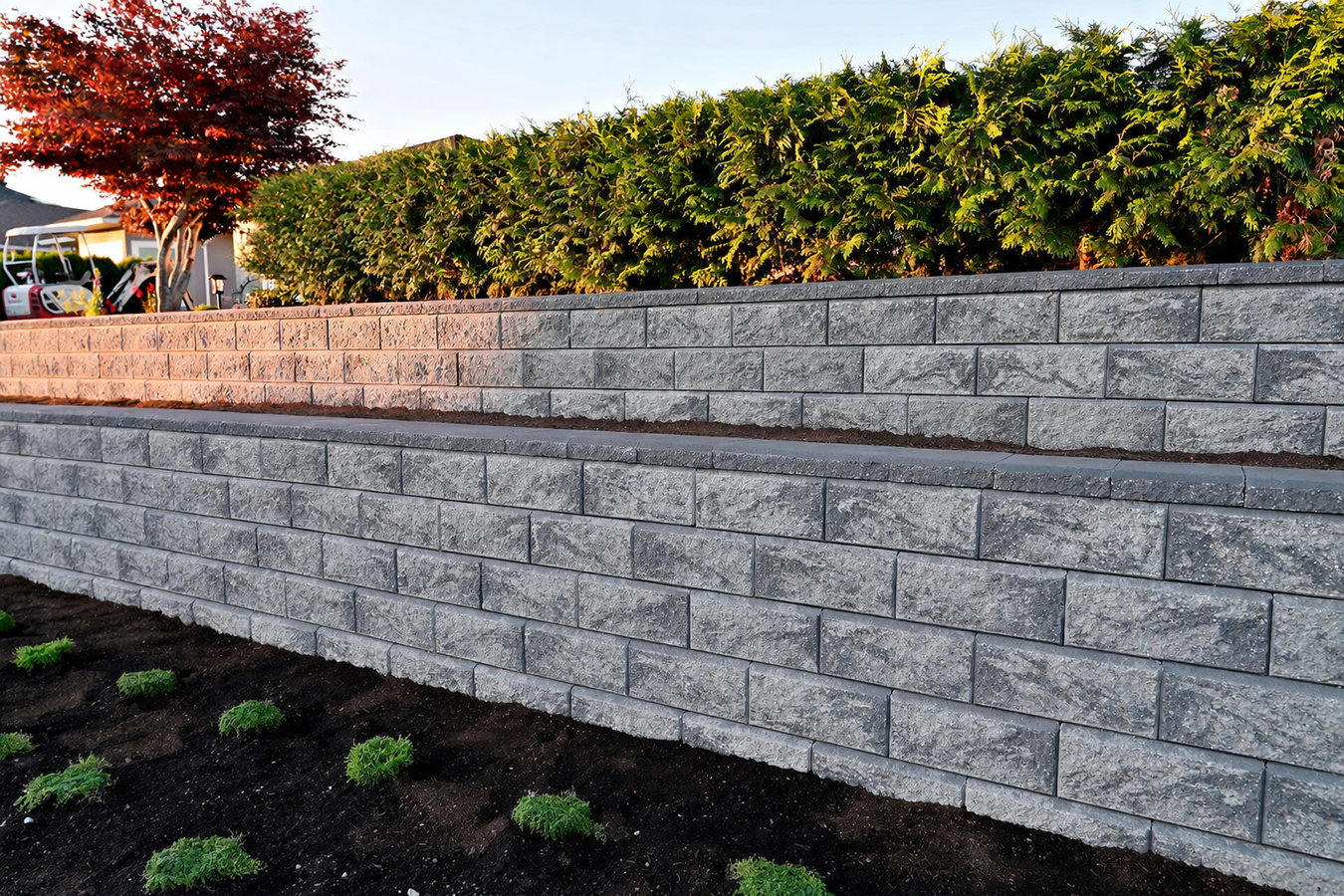
Soil washing downhill after every storm? A properly built retaining wall stops erosion, levels out your slope, and creates usable outdoor space that lasts through Quincy winters.
Concrete retaining wall installation in Quincy means excavating the slope, preparing a footing below the frost line, building the wall with proper drainage behind it, and backfilling once the concrete has cured. Most jobs take two to five days of active construction, with the full timeline extending to four to six weeks once permits are factored in.
In Quincy, a retaining wall is not just a landscaping project. Hilly neighborhoods throughout the city, combined with significant rainfall and the repeated freeze-thaw cycles that run from November through March, put real pressure on any wall that is not built to handle those forces. A wall without proper drainage or frost-depth footings will begin to lean within a few winters.
If your project involves grading and new hardscape along with the wall, we also handle concrete floor installation for any adjacent patio or utility areas. Combining work saves on mobilization costs and keeps finishes consistent.
If an existing wall is no longer plumb, is visibly tilting toward the yard, or shows wide cracks running through it, it is under stress. In Quincy's climate, repeated winter freeze-thaw cycles accelerate this kind of damage. A wall that is already moving could fail entirely within a season or two.
If you notice soil, mulch, or gravel migrating down your yard after heavy rain and collecting at the base of a slope, your property is actively eroding. Quincy gets significant rainfall year-round, and sloped lots without support lose topsoil steadily. A retaining wall stops that process and protects whatever is planted or built at the bottom.
If part of your yard is too steep to mow, too unstable to plant, or too awkward to use for anything, a retaining wall can level it out. Many homeowners in hillier Quincy neighborhoods like Squantum and West Quincy have turned dead slopes into real outdoor space with a well-placed wall.
If standing water collects against your house or near the foundation after storms, poor grading or an eroding slope may be directing runoff toward your home. Left alone, this can lead to basement moisture problems or foundation damage. A retaining wall combined with proper grading can redirect that water away.
We build two primary types of concrete retaining walls: poured concrete walls and concrete masonry unit (block) walls. Poured concrete walls are formed on-site and cured in place, making them a strong, monolithic choice for taller walls or situations where soil pressure is significant. Concrete block walls are built course by course, offer more design flexibility for curved or terraced layouts, and can be an efficient choice for shorter residential walls.
Every wall we build includes proper drainage behind it. Gravel backfill and perforated drain pipe are installed before backfilling so water can escape rather than build up pressure against the wall. Skipping this step is one of the most common reasons walls fail in New England, and it is not something we cut. If your project also involves outdoor steps up a slope, we can integrate concrete steps construction into the same project so the wall and the access point are built together and finished consistently.
For homeowners who want the wall to do double duty as a visual feature, we can incorporate decorative finishes and color into the block selection. This works particularly well in front yards where the wall is visible from the street.
Best for taller walls or situations with significant soil pressure and heavy drainage needs.
Suited to homeowners who want design flexibility, curved layouts, or shorter terraced walls.
Ideal for front-yard or visible walls where appearance matters alongside structural performance.
Quincy sits in a climate zone where temperatures drop below freezing repeatedly from November through March. Every freeze-thaw cycle applies force to the soil behind a retaining wall, and a wall built without footings that go below the frost line will start to lean or shift over time. This is not a risk that can be patched later. The footing depth has to be right from the start, and contractors who have worked in this specific market know that.
Much of Quincy's residential stock was developed before 1970, which means many properties already have retaining walls that are 50 years old or more. Those older walls were often built without drainage and may have no reinforcement inside them. Neighborhoods near Quincy Bay and the Fore River face the additional challenge of higher water tables and storm runoff, both of which accelerate wall failure when drainage is inadequate. Properties in hillier areas like Squantum and West Quincy deal with similar slope challenges as homeowners in Newton.
Quincy's glacially deposited soil adds one more variable. Ledge rock and dense till can appear just below the surface, especially in hillier neighborhoods. This can extend excavation time and require specialized equipment. Contractors who have not worked in this area before often underestimate this. Getting estimates from contractors with local experience is worth the extra step. Massachusetts building code also requires permits for walls over four feet, and Quincy enforces this requirement through its Inspectional Services Department.
We respond within 1 business day to schedule a free on-site visit. We look at the slope, measure the area, check for drainage issues, and ask what you want to accomplish. No numbers are given until we have seen the property in person.
You receive a written estimate that breaks down labor, materials, and permit costs. We file the permit with the City of Quincy on your behalf. Most permits add one to three weeks to the start date, so factor this into your planning.
Work begins with excavating the footprint and preparing the footing below the frost line. In Quincy's glacial soil, this can take longer if rock is encountered. A solid footing is what keeps the wall from shifting over time.
The wall goes up alongside drainage gravel and pipe behind it. After the concrete cures, about one week for poured walls, the area is backfilled and compacted. The crew cleans up the site before leaving.
We visit your property, give you a written estimate, and handle the permit. No obligation, no guesswork.
(617) 691-5917Every wall we build has footings placed below the Massachusetts frost depth. This is not an upgrade, it is standard practice. A wall with shallow footings in Quincy's climate will shift within two or three winters.
Drainage gravel and perforated pipe go in before the backfill on every project. The American Concrete Institute cites inadequate drainage as the leading cause of retaining wall failure in freeze-thaw climates, and we treat it as non-negotiable.
We file with Quincy's Inspectional Services Department and coordinate the inspection. A permitted wall is on record with the city, which protects you legally and makes a real difference when you sell your home.
We work across Quincy, Brockton, Cambridge, Newton, and eight other service areas in eastern Massachusetts and Rhode Island. Local presence means we know the soil conditions, permit timelines, and inspector expectations in each city.
Our work in Quincy is built around the conditions that actually exist here: glacial soil, coastal drainage challenges, and winters that test every wall. When you call us, you get a contractor who has dealt with those conditions before and built the process around them from the first estimate to the final inspection.
New concrete floors for basements, garages, and utility spaces, poured with proper base prep and moisture protection.
Learn moreConcrete steps that connect different grade levels of your property and complement the wall design.
Learn moreEvery season you wait, Quincy's freeze-thaw cycle does more damage. Call us today for a free on-site estimate with no obligation.