
Loading...
Serving Quincy, MA and surrounding areas. (617) 691-5917
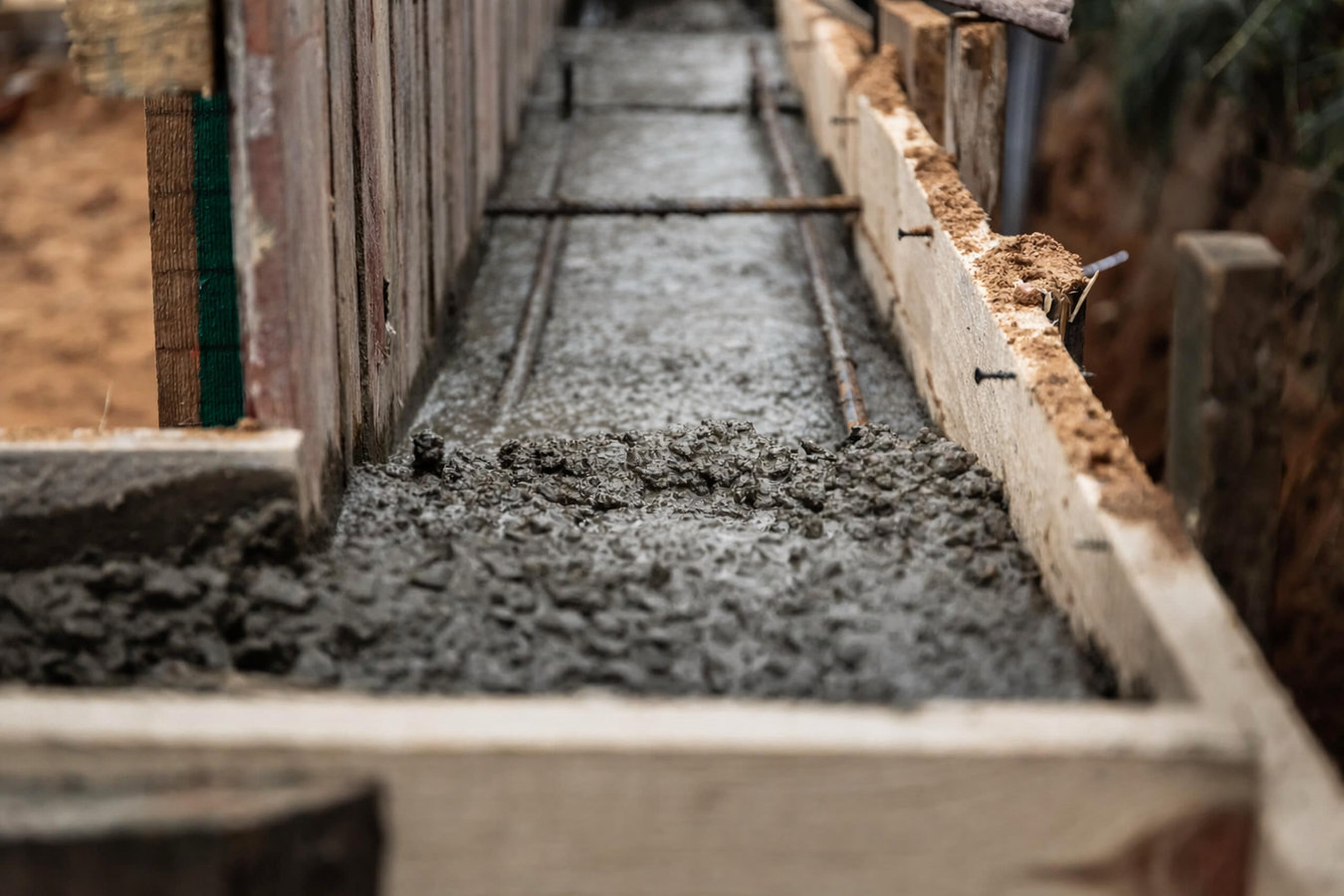
A foundation that was not built deep enough or properly waterproofed will show problems within a few years. We install foundations in Quincy with the excavation depth, drainage, and waterproofing this climate requires.
Foundation installation in Quincy means excavating the site, placing forms and steel reinforcement below the Massachusetts frost line, pouring the concrete walls and footings, waterproofing the exterior, installing a drainage system at the base, and backfilling once the concrete has cured. A typical residential project runs one to three weeks of active work, plus a curing period before framing begins, and four to six weeks total from first contact when permit time is included.
Your foundation is the single most critical structural element in your home. It transfers the weight of the entire building down into the ground, and everything above it, walls, floors, roof, depends on it staying level and dry. In Quincy, where the ground freezes and thaws every winter and older homes often have original foundations that were never reinforced, choosing the right contractor matters more than it might in a warmer or newer market.
For projects where a full basement is not needed, we also offer standalone slab foundation building for garages, additions, and accessory structures where a slab-on-grade is the right structural approach.
If doors or windows that used to open and close easily now stick, drag, or leave visible gaps at the corners, the frame of your house may be shifting. This kind of movement often traces back to a foundation that is settling unevenly or has been compromised. In Quincy's older neighborhoods, where many homes still sit on original rubble or brick foundations, this is one of the first warning signs homeowners notice.
Small hairline cracks in concrete are common and not always serious. But cracks that run diagonally from the corners of windows or doors, or that follow a stair-step pattern along a brick or block wall, suggest the foundation is moving or settling in a way that needs evaluation. In Quincy, repeated freeze-thaw cycles each winter can accelerate this kind of cracking in foundations that were not built deep enough or were not properly waterproofed.
If you find water on your basement floor or seeping through the walls after a significant rainstorm or during the spring thaw, the foundation's waterproofing has likely failed or was never adequate. Quincy's wet winters and coastal proximity mean groundwater pressure against basement walls is a recurring issue. Water intrusion is not just a nuisance; over time it weakens the concrete and can lead to structural problems.
If a home inspector noted foundation issues in a report, whether you are buying, selling, or refinancing, that finding should be taken seriously. Inspectors in the Quincy area frequently flag original stone or brick foundations in pre-1950s homes as having reached the end of their useful life. A concrete contractor's in-person assessment is the logical next step before making any decisions.
We install poured concrete foundations for new homes, additions, and full foundation replacement projects. Every installation starts with a site visit to assess soil conditions, confirm lot access for equipment, and review any drainage or waterproofing concerns specific to your location. Quincy's soil varies significantly, from bedrock outcroppings in hillier neighborhoods to marine clay and fill in lower-lying areas near the water. We account for those conditions before the first estimate is written.
After excavation, forming, and steel placement are complete, a city inspector verifies the work before any concrete is ordered. Waterproofing is applied to the exterior of the foundation walls before backfill goes in, and a perforated drain pipe is installed at the base of the footing to carry groundwater away from the structure. This drainage step is often skipped by contractors trying to lower a quote; it is one of the most common reasons homeowners end up with wet basements years after a project closes.
For projects where a full basement is the right solution, we pair our foundation work with any needed slab foundation building for garage floors or adjacent structures on the same property. We also handle related structural concrete work such as concrete parking lot building for commercial or larger residential sites where driveway and parking surfaces are part of the same project scope.
Best for homeowners who want usable below-grade space; includes full excavation, poured concrete walls, waterproofing, and a drainage system.
Suited to lots where a full basement is not practical but a slab is not preferred; includes short poured walls and a vapor barrier system.
Ideal for Quincy homes built before 1960 where the original rubble stone or brick foundation has reached the end of its useful life.
Quincy experiences roughly 100 freeze-thaw cycles per year, according to regional climate data. That repeated ground movement is the primary reason foundation footings in Massachusetts must be placed below 48 inches, well past the frost line. A contractor who does not account for this requirement in their excavation and forming will build a foundation that moves every winter. The damage is gradual and largely invisible until it is expensive to fix.
A large share of Quincy's housing stock was built between the 1890s and 1950s, particularly in neighborhoods like Wollaston, Germantown, and South Quincy. Many of those homes still sit on original rubble stone or early brick foundations that were never reinforced with steel. When homeowners in these neighborhoods add an addition or undertake a full rebuild, they frequently discover that replacement is the only practical path forward. That work is more complex than new construction on a clean lot, and it requires a contractor who has done it before.
Quincy's coastal and lower-lying areas, including neighborhoods near Quincy Bay and the Fore River, present a second challenge: variable soil. Marine clay compresses under load and shifts seasonally, and fill in some areas behaves unpredictably. Homeowners in Quincy should ask any contractor for a site visit before accepting a written quote. Homeowners in Cambridge and Lowell face their own local soil and frost conditions, and we bring the same site-first approach to every project we take on. The National Association of Home Builders publishes residential foundation guidelines that inform how we approach depth, drainage, and waterproofing on every project.
We visit your property to assess lot access, review soil conditions where visible, and understand the full project scope before writing an estimate. Foundation work varies too much by site to quote accurately by phone. We respond within one business day of your initial contact.
We apply for the building permit with the City of Quincy's Inspectional Services Department as the first project step. No digging starts until the permit is issued. This typically adds one to two weeks before the crew mobilizes, and we build that time into the project schedule from the start.
The crew excavates to the required depth, builds the forms, and places steel reinforcement. A city inspector verifies the work before concrete is ordered. Waterproofing and a perforated drain pipe are installed after the pour and before backfill goes in, while the exterior walls are still accessible.
The concrete cures with the forms protecting it. Forms come off, the exterior is waterproofed and drained, and soil is backfilled and compacted. A final city inspection closes the permit. You receive a completed, documented foundation ready for framing, typically within five to six weeks of the first call.
We visit every site before quoting, file permits with the City of Quincy, and provide a written estimate that covers the full scope. Foundation slots fill up months in advance, especially for spring and summer starts, so the earlier you reach out, the more scheduling options you will have.
(617) 691-5917Quincy's soil ranges from bedrock to marine clay within a few streets of each other, and lot access varies just as much. We visit your property before we write a single number on paper. That means the price you agree to reflects your actual site conditions, not a generic average that grows once the crew arrives.
We apply exterior waterproofing and install a footing drain as standard parts of every foundation installation. In Quincy's coastal neighborhoods and in the city's many older neighborhoods where groundwater management was never part of the original construction, skipping this step is the most common reason homeowners end up with water in their basement years after a project closes.
We work across Quincy, Cambridge, Lowell, Newton, Brockton, and eight additional communities in greater Boston and Rhode Island, which means our crews have hands-on experience with the local soil conditions, permit processes, and frost requirements across the region. That coverage also means our supply relationships and scheduling are stable year over year.
We handle the entire City of Quincy permit process: application, scheduling of city inspections at each required stage, and final closeout. You receive a complete permit record for your home. Massachusetts law lets you verify a contractor's Construction Supervisor License at any time through the state's online database, and we encourage you to do exactly that before hiring anyone.
Verify any Massachusetts contractor's Construction Supervisor License through the Office of Consumer Affairs and Business Regulation before signing a contract. A licensed contractor who pulls permits and welcomes inspections gives you protections that no warranty clause in a contract can replicate.
Durable concrete parking surfaces for residential and commercial properties, built to handle Quincy's freeze-thaw cycles without cracking or heaving.
Learn moreGround-level concrete slabs for garages, additions, and outbuildings where a full basement is not required but a frost-resistant base is.
Learn moreFoundation projects require permit time and careful scheduling around Quincy's weather window. Reach out now for a written, on-site estimate, and get on the schedule before spring slots close.