Loading...
Serving Quincy, MA and surrounding areas. (617) 691-5917
A cracked or uneven sidewalk is both a hazard and a liability. We build concrete sidewalks in Quincy with the gravel bases and control joints that keep them level and intact through New England winters.
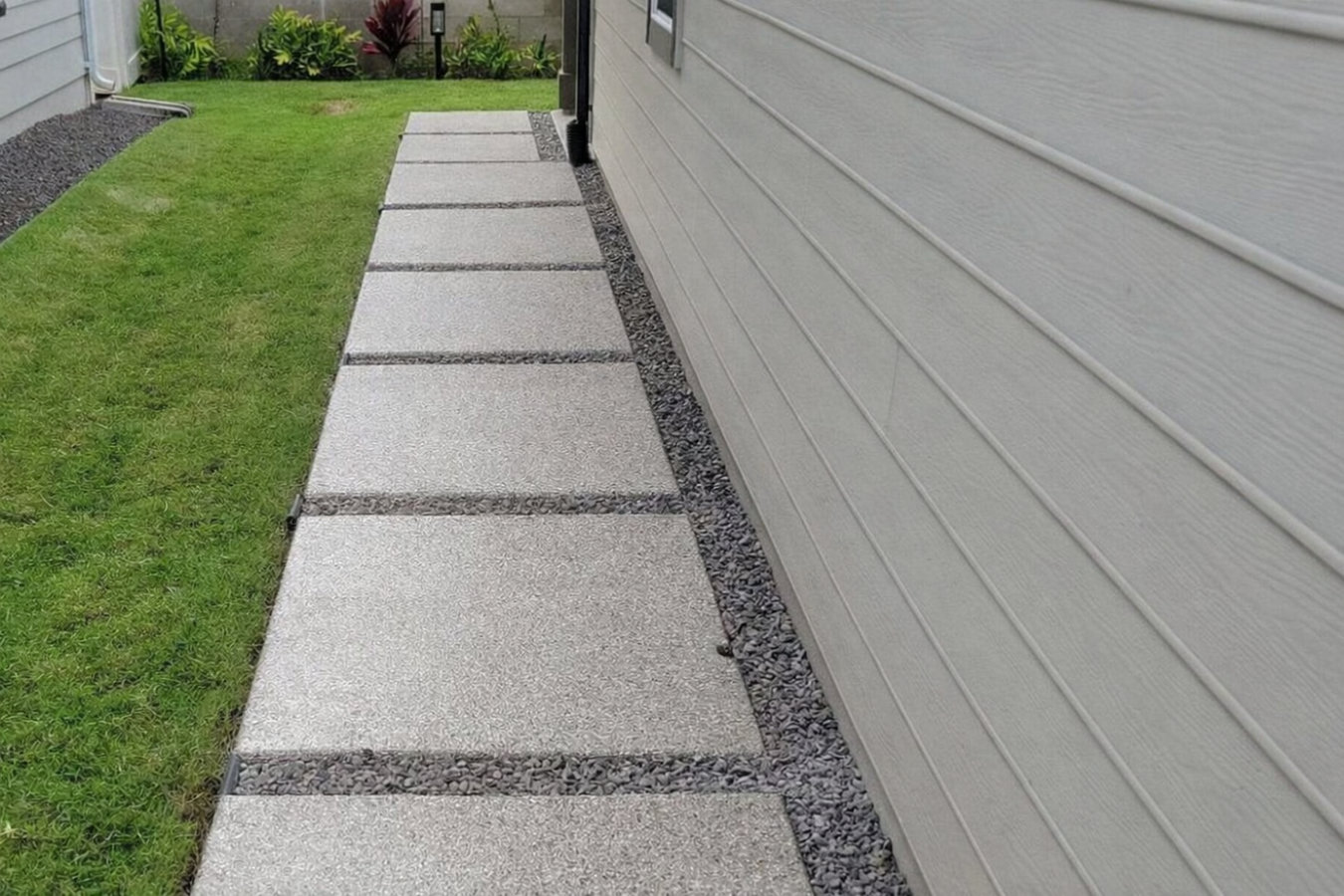
Concrete sidewalk building in Quincy involves removing the old surface, compacting a gravel base, forming the edges, and pouring a four-inch slab with a broom finish for traction - most residential jobs take one full day of active work and are walkable within 24 hours. If you are dealing with a sidewalk that is cracked, sunken, or flaking, the right move is usually a full replacement rather than a patch. Patching the surface does not fix what is happening underneath. When combined with a concrete driveway, a new sidewalk gives your property a consistent, finished look from the curb to your front door.
In Massachusetts, property owners can be held liable for injuries caused by unsafe walkways on their property. That makes a cracked or heaved sidewalk more than an aesthetic problem. PaveRight Quincy Concrete handles the permits, base prep, and installation so your walkway is safe, code-compliant, and built to handle Quincy winters.
Small hairline cracks are normal in any concrete, but wide cracks - or ones that reopen after patching - mean the underlying structure has shifted. In Quincy's climate, water gets into those cracks, freezes, and forces them wider every winter. Patching will not hold, and the damage accelerates with each cold season.
If one section of your sidewalk sits noticeably higher or lower than the one next to it, the ground underneath has moved. This is common in Quincy neighborhoods built on older fill or near the coast, where soil settles unevenly. Beyond being an eyesore, uneven sections are a trip hazard that can expose you to liability under Massachusetts law.
If your sidewalk sheds small chips or gritty powder when you sweep it, the top layer is breaking down - usually from years of road salt exposure combined with freeze-thaw damage, both very common in Quincy. Once the surface starts flaking, it accelerates quickly and cannot be restored by sealing alone.
A properly built sidewalk has a slight slope so water runs off to the side. If puddles form after rain or snowmelt, the slab has settled out of level or was never graded correctly. Standing water speeds up freeze-thaw damage and can also direct water toward your foundation.
PaveRight Quincy Concrete builds standard residential sidewalks as well as wider paths, ADA-compliant walkways, and multi-section projects that connect a front walk to a driveway apron or steps. Every installation includes a compacted gravel base, correctly spaced control joints, and a broom finish for wet-weather traction. For homeowners who want something more decorative than a plain gray surface, we offer garage floor concrete and other flatwork finishes that can be applied to sidewalks and paths as well.
Permit handling is included as a standard part of every job that requires one. If your sidewalk runs along the street, it falls in the public right-of-way and Quincy requires a permit from the Department of Public Works before work begins. We apply for it, track its status, and have it posted before any work starts. You do not need to contact the city yourself. For guidance on what to expect from city permitting, the City of Quincy Department of Public Works publishes current permit requirements on their website.
For homeowners replacing a cracked or sunken path from the street to the front door.
Connects driveways, garages, and backyard areas with a level, durable surface.
Brings walkways into compliance with slope and width requirements at property entries.
Matches the sidewalk grade to a new or existing driveway for a seamless transition.
Quincy averages more than 40 freeze-thaw cycles per year. That number is important because every cycle is a stress event for any concrete surface: water seeps in, freezes, expands, and forces whatever gap it is in to grow. A sidewalk installed without a proper compacted base and correctly spaced control joints will fail within a few winters in this climate. A sidewalk built the right way will last 30 to 50 years. The difference is entirely in the prep work that happens before the concrete is poured.
A large share of Quincy's residential neighborhoods were built out in the early-to-mid 20th century. In areas like Wollaston, Merrymount, and South Quincy, many sidewalks have never been replaced and are past their useful life. Older concrete in Quincy was often poured thinner and without the drainage considerations that modern work requires. If your home was built before 1970, your sidewalk has likely been through enough freeze-thaw cycles to warrant a close look. The Portland Cement Association provides detailed guidance on what properly built flatwork in cold climates requires.
PaveRight serves homeowners across the region, including in Lynn, Cambridge, and Newton- all communities that deal with the same freeze-thaw conditions and road salt exposure as Quincy. We apply the same base prep standards and cold-climate installation practices on every project regardless of city.
We respond within 1 business day to schedule a visit. We measure the area, review what is currently there, check for access challenges, and confirm permit requirements. You get a written estimate that breaks out all costs, including demolition, base prep, the pour, and permit fees.
If a permit is required, we apply immediately after you approve the estimate. Quincy DPW processing typically takes a few business days to a couple of weeks. Work does not start until the permit is posted - no exceptions.
On the day of work, we remove the old surface, haul away debris, compact the soil, and lay a gravel base. Forms are set, concrete is poured, finished with a broom texture for traction, and control joints are cut or pressed in. For a standard residential sidewalk, this takes one full day.
Light foot traffic is fine after 24 hours. We walk the finished surface with you before leaving to point out the control joints, explain the curing timeline, and confirm when a sealer application is recommended. Get warranty terms in writing before we leave.
We respond within 1 business day. There is no obligation, and we will not pressure you to commit during the estimate visit. After you submit, someone from our office will call to schedule a time to see the site.
(617) 691-5917Any sidewalk along a Quincy street requires a DPW permit before work begins. We apply, track, and post the permit as a standard part of the job. You will never need to contact the city yourself.
A four-to-six inch compacted gravel base is non-negotiable on every sidewalk we build. It is what separates a surface that holds up for 30 years from one that sinks or heaves after a few winters. We do not skip it to cut costs.
We have worked on sidewalks in Wollaston, South Quincy, Merrymount, Quincy Point, and Germantown. Knowing the soil conditions, access constraints, and permit timelines in each neighborhood is how we keep jobs on schedule.
PaveRight holds a Massachusetts Home Improvement Contractor registration and carries full liability coverage on every job. You can verify both before any work starts. The{' '}<a href='https://www.mass.gov/orgs/office-of-consumer-affairs-and-business-regulation' target='_blank' rel='noopener noreferrer' className='text-primary underline hover:opacity-80'>Massachusetts Office of Consumer Affairs</a>{' '}allows you to look up any contractor registration online.
Every job comes with a written estimate covering all costs before work starts. If anything unexpected comes up during the project, we contact you before changing the scope or the price.
Upgrade the floor inside your garage with the same durable concrete work that handles heavy traffic and Massachusetts winters.
Learn morePair a new sidewalk with a full driveway replacement for a complete, consistent look from the street to your front door.
Learn moreQuincy winters are hard on sidewalks that were not built correctly the first time. Starting the job before the next freeze-thaw season is the best way to protect your new investment from day one.