
Loading...
Serving Quincy, MA and surrounding areas. (617) 691-5917
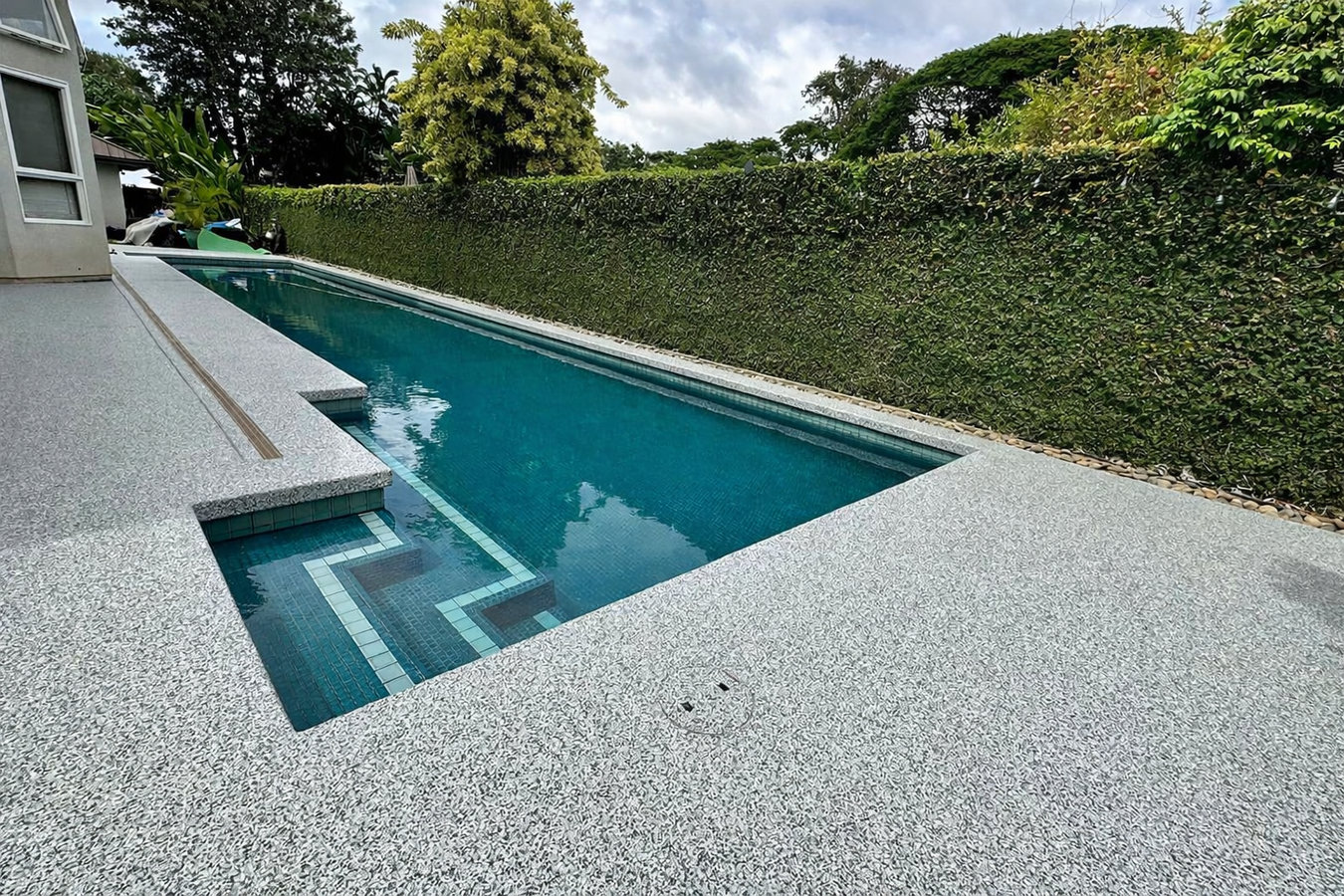
A cracked, uneven pool deck is a safety hazard and an eyesore. We build concrete pool decks in Quincy that drain properly, hold up through winters, and look the way you pictured.
Concrete pool decks in Quincy means demolishing the existing surface if needed, preparing a stable gravel base, pouring and finishing concrete with a proper drainage slope away from the pool, and curing it before use. Most residential pool deck installations take two to five days of active work, with full cure strength reached over about four weeks.
A pool deck is one of the most used surfaces in your backyard, and in Quincy it takes a beating from bare feet in summer and freeze-thaw cycles all winter. A deck that was poured without enough attention to drainage slope, joint placement, or surface texture will show its age quickly. Many homeowners in older Quincy neighborhoods like Wollaston and Merrymount are living with original decks that are well past their useful life.
If you are adding outdoor living space beyond the pool area, our concrete patio construction service can extend the project so the deck and patio are poured and finished in one consistent pass.
If you notice cracks that were not there last fall appearing after the snow melts, that is freeze-thaw damage. Quincy winters are hard on concrete, and once cracks start spreading in a web-like pattern they get worse each season. Small hairline cracks can sometimes be sealed, but widespread cracking usually means the deck needs resurfacing or replacement.
Walk out to your pool deck after a rainstorm and look at where the water goes. If it sits in puddles or runs toward your house foundation rather than away from it, the drainage slope has failed. This is both a safety issue and a structural one, since water that does not drain accelerates surface deterioration.
If the concrete feels rough and crumbly or you can see small chunks flaking off, the surface layer is breaking down. This is called spalling and it is common in older Quincy decks that were never sealed or were sealed with products not suited to New England winters. A spalling surface is also a cut-foot hazard for anyone walking barefoot.
If you can see or feel areas where one section of the deck sits higher or lower than the next, the base beneath the concrete has shifted. This creates a tripping hazard and also means water is no longer draining as designed. Uneven sections tend to get worse over time as the underlying soil continues to move.
We offer three surface finishes for concrete pool decks, each suited to different priorities. A broom finish is the most practical choice: it is textured enough to give bare feet good traction, straightforward to maintain, and holds up well through New England winters. It costs less than decorative options and is the right call for most residential pools.
For homeowners who want a more distinctive look, exposed aggregate finishes embed small stones into the surface for both texture and visual interest. Stamped concrete, which we also offer as part of our concrete steps construction and patio work, can be used on pool decks to create patterns that look like stone or tile at a fraction of the cost. Stamped finishes cost more and require more careful sealing, but they genuinely transform the look of a backyard.
Every pool deck we install is sloped away from the pool edge at a minimum grade so water drains toward the yard rather than pooling on the surface or running toward your foundation. Control joints are placed at regular intervals to give the slab room to expand and contract with temperature changes, reducing the risk of random cracking.
Best for most homeowners: slip-resistant, durable, and the most cost-effective option for a pool surround.
Suited to homeowners who want more visual texture and traction without the cost of a decorative stamped finish.
Ideal for homeowners who want the look of stone or tile around their pool at a price below natural materials.
Quincy sits in USDA Hardiness Zone 7a and experiences dozens of freeze-thaw cycles every winter. When water seeps into small surface cracks and freezes, it expands and widens those cracks. A deck built without the right concrete mix, proper joint spacing, and a penetrating sealer will start deteriorating within a few seasons. This is not a minor detail in a New England climate. Every material and installation decision we make is made with a Quincy winter in mind.
A significant portion of Quincy's residential neighborhoods, including those around Wollaston and Merrymount, feature homes built between the 1940s and 1970s. Pools installed during that era often have decks well past their useful life that may have been built to standards no longer current. Homeowners near Quincy Bay and the Squantum and Marina Bay areas face an additional challenge: salt air accelerates surface wear on concrete and affects how sealers perform over time.
The City of Quincy requires permits for new pool deck construction and significant replacements. Homeowners in Newton and Cambridge face similar permit requirements. We handle the permit application as part of every project. The American Concrete Institute publishes guidance on concrete durability in freeze-thaw climates that informs how we specify our mixes.
We will reply within one business day. You will be asked about your pool size, whether you are replacing an existing deck, and what finish interests you. We schedule a free on-site visit before quoting because the condition of your base and drainage situation both affect the price.
We walk the area, check your existing concrete if applicable, and look at how water currently drains. You get a written quote that covers demolition, materials, labor, and permit fees before anything starts. No verbal ballparks.
We apply for the building permit through the City of Quincy. Once approved, we break out the old deck, haul debris, and compact a gravel base. This prep work is what determines whether the new slab lasts or starts failing in a few years.
Concrete is poured, sloped for drainage, finished to your chosen texture, and control joints are placed. You can walk on it lightly within 24 to 48 hours. We do a final walkthrough before we pack up so you can check the finish, slope, and edges.
Free on-site estimate. Written quote before work starts. Permits handled.
(617) 691-5917Every mix we use, every joint we cut, and every sealer we apply is chosen for New England winters. A pool deck that looks great in August needs to survive February. We build it that way from the start.
Poor drainage is one of the most common complaints about older pool decks. We set the slope before the pour so water runs away from your pool and your foundation. You should never see puddles sitting on the surface after rain.
We pull every required permit from the City of Quincy and coordinate the inspection. You get documentation showing the work was reviewed and approved. That record is worth real money when you sell your home.
We work throughout Quincy and across our 12 service areas in eastern Massachusetts and Rhode Island. Local contractors know local conditions. The Massachusetts OCABR registration we carry verifies we are operating legally in this state.
Pool deck work in Quincy has a narrow seasonal window and contractors fill their schedules quickly. The proof points above are not marketing language. They are the specific things we do on every job that determine whether a deck lasts or fails. Call us now to get on the schedule before the season books up.
Add or replace steps leading to your pool deck or patio with a finish that matches and drains correctly.
Learn moreExtend your outdoor living area beyond the pool with a poured concrete patio built to the same standard as your deck.
Learn moreContractor schedules on the South Shore book fast once the weather turns. Contact us now to lock in your start date and get a written estimate.