
Loading...
Serving Quincy, MA and surrounding areas. (617) 691-5917
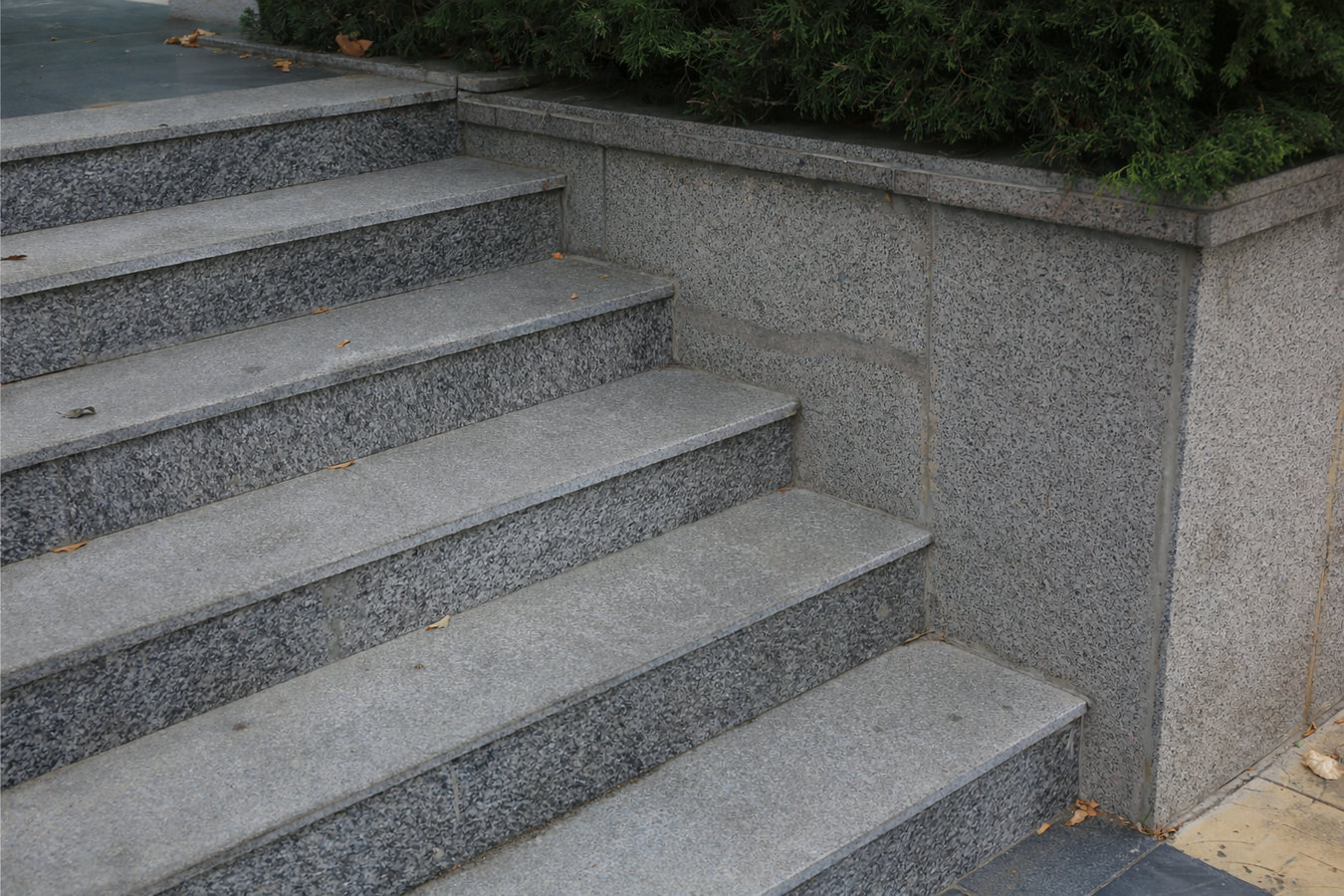
Cracked, crumbling, or tilted front steps are a safety risk every time it rains or snows. We build new concrete steps in Quincy that hold up through winter, drain correctly, and look right on your home.
Concrete steps construction in Quincy means demolishing the existing stoop if needed, excavating and compacting a stable gravel base, building wooden forms, pouring concrete, finishing the surface with a textured grip, and allowing it to cure before use. Most residential step projects take one to two days of active work, with normal foot traffic resumable within about a week.
Front steps are one of the most used and most visible parts of any Quincy home. They are also under constant stress: foot traffic, rain, snow, ice-melt products, and the freeze-thaw cycles that hit this city repeatedly from November through March. In older neighborhoods like Wollaston and Merrymount, many original brick or stone stoops from the 1930s through 1950s are now at or past the end of their useful life.
If your project involves more than just the steps, we also build concrete retaining walls for sloped entries and can integrate the two projects so the steps and wall are built and finished in one pass.
Small hairline cracks in concrete are normal and usually harmless, but when a crack is wide enough to fit your fingertip into, water is getting inside. In Quincy winters, that water freezes, expands, and makes the crack larger every season. What looks like a cosmetic issue today becomes a structural one within a few years.
If your steps wobble when you step on them, or if you can see that they have shifted away from the house or tilted to one side, the base underneath has failed. This is a safety issue, not just an appearance issue. A tilted step is a trip hazard, especially in wet or icy conditions.
If the top layer of your steps is peeling away in thin flakes or crumbling at the edges after a hard winter, the concrete is spalling. This is common on steps that are 20 or more years old in Quincy's coastal climate. Once spalling starts it tends to accelerate each winter, and patching rarely holds for long.
If your home was built in the 1930s through 1950s and still has its original brick stoop, look closely at the mortar. When mortar crumbles away, bricks shift, water gets behind the stoop, and the whole structure can become unsafe. Replacing it with poured concrete is often more cost-effective than repeated masonry repairs.
We pour poured-in-place concrete steps for residential front entries, side entries, and back decks. Poured-in-place steps are formed on-site to match your specific entry dimensions, integrated with your foundation or landing, and finished to the surface texture you choose. For most Quincy homes, this is the right approach: it gives you a custom fit, a solid monolithic structure, and no gaps for water to pool or freeze.
Surface finish matters for safety, not just appearance. A broom finish, where the contractor drags a stiff brush across the surface before it hardens, creates fine ridges that give shoes traction on wet or icy steps. Exposed aggregate provides even more grip and works well for wider entries where traction is a higher priority. For homeowners who want a more finished look, we can incorporate the same finishes used in our concrete retaining wall work to tie the entry together visually.
Every set of steps we build is sloped very slightly away from the house so water runs off toward the yard rather than pooling at the base of the door or running toward your foundation. We also apply a penetrating concrete sealer after the cure to protect the surface from the freeze-thaw cycles and road salt that are standard conditions in Quincy from November through March.
Best for most residential entries: custom dimensions, integrated with your foundation, durable monolithic structure.
Suited to homeowners who want reliable traction on a budget with a clean, consistent appearance year-round.
Ideal for wider entries or homeowners who want maximum traction and a more textured visual finish.
Quincy regularly experiences temperatures that swing above and below freezing dozens of times between November and March. Every time water gets into a small crack and freezes, it expands and makes that crack bigger. Steps built without a properly compacted base, a surface that sheds water, and a penetrating sealer applied after cure will not survive more than a few winters in this climate. The quality of the mix and the depth of the base matters here in a way that it simply does not in a warmer region.
A large share of Quincy's housing stock, particularly in neighborhoods like South Quincy, Wollaston, and Merrymount, was built between the 1920s and 1950s. Many of those original front stoops are at or past the end of their useful life. Homeowners in Quincy's coastal neighborhoods near Wollaston Beach and Quincy Bay face additional wear from salt air, which accelerates surface degradation on steps that are not properly sealed.
The City of Quincy requires building permits for most full step replacements, especially where the work is attached to the structure or changes the grade. Homeowners in Brockton and Newton face similar requirements. We handle the permit application as a standard part of every project. The Portland Cement Association publishes installation and durability standards that guide how we approach every job.
We reply within one business day. You will be asked about your existing steps, number of treads, and whether demolition is needed. We schedule a free on-site estimate before quoting, because pricing depends on what we see in person.
We look at your existing stoop or entry, measure accurately, and assess the base condition. You get a written quote covering demolition, materials, labor, and permit fees before any work starts.
We apply for the building permit through Quincy's Inspectional Services Department. Once approved, we remove the old steps and haul debris. We then excavate and compact a gravel base. This prep work determines whether your steps last or shift within a few years.
Wooden forms are built to your entry dimensions. Concrete is poured, textured, and the forms removed after one to two days. You can use the steps carefully within 24 to 48 hours, with full strength reached in about a month. We do a final walkthrough before we leave.
Free on-site estimate. Written quote before work starts. Permits handled end to end.
(617) 691-5917We use concrete mixes, base depths, and sealers chosen specifically for the freeze-thaw cycles Quincy gets from November through March. Steps that hold up in August need to still look right in April. We build them that way.
A large share of homes in Quincy were built between the 1920s and 1950s, and we have replaced more original brick and stone stoops in this city than we can count. We know how they were built, what typically goes wrong with the base, and how to do the replacement without disturbing your foundation.
We pull the permit, coordinate the city inspection, and hand you the documentation before we close the job. That paperwork shows the work was reviewed and approved, which matters when you sell your home or make a claim. A contractor who skips the permit is putting that liability on you.
We work across 12 service areas from Quincy to Providence. Quincy alone has three MBTA Red Line stops, meaning most homeowners here commute and need work scheduled around their day. We coordinate around your schedule, not ours. Verify our state registration at the Massachusetts OCABR.
Front steps are the first thing anyone sees when they arrive at your home. In a city where home values consistently exceed the national median, the condition of your entry matters to buyers, inspectors, and neighbors. Call us now to get a written estimate and lock in a start date before the spring rush hits.
If your project involves more than just steps, we pour slab foundations for additions, garages, and new construction.
Learn moreSloped entries often need a retaining wall to stabilize the grade alongside the new steps.
Learn morePermit season fills up fast. Contact us now for a free on-site estimate and a written quote with no surprises.